A month ago, I wrote a very long article about something I think Coca-Cola should start doing. Today, I’ve written an even longer article about something I think Coca-Cola should stop doing–not just for the 2026 holiday season, but indefinitely. That said, I can’t go on without setting up a little historical context…
Videos by Sporked
In 1915, Coca-Cola was facing a big problem. Countless competitors were selling knock-off colas with similar names and labels in the very same glass bottles used by Coca-Cola’s regional bottlers. To solve this, Coca-Cola’s lead attorney Harold Hirsch wanted to patent a bottle design that would only ever be filled with the real thing. After the Coca-Cola Bottling Association agreed to put up the equivalent of $16,500 in today’s money towards the development of an exclusive bottle, Hirsch sent the following design brief to glass companies around the country:
“A bottle so distinct that it could be recognized by touch in the dark or when lying broken on the ground.“
Harold Hirsch
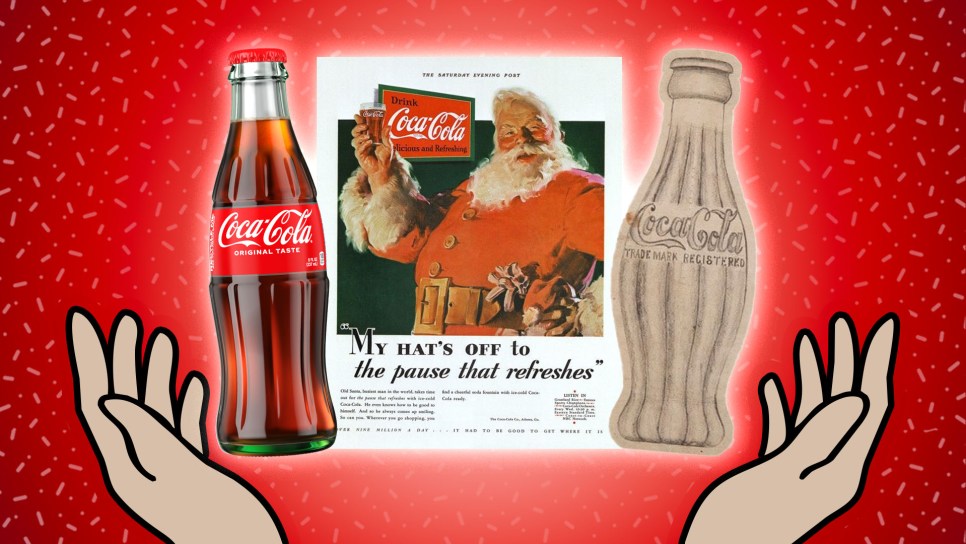
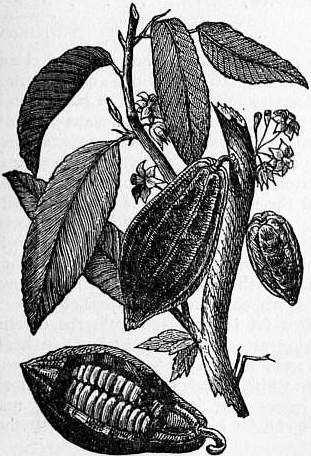
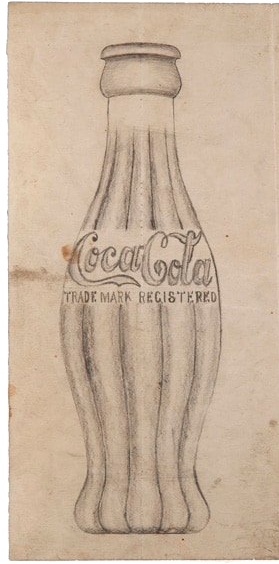
The winning design, now known as the Contour Bottle, was created by Terre Haute, Indiana’s Root Glass Company. Inspired by the ridges of a cocoa bean, Earl Dean sketched the original design under the direction of Alexander Samuelson. (That inspiration may have been accidental; at least one retelling suggests that an accountant brought the “cocoa” page of the Encyclopædia Britannica back from the library rather than the “coca” page Samuelson actually requested.) While the original design was slimmed down, there’s no mistaking the origins of the most famous beverage container on earth. 30 years later, a study concluded that over 99% of Americans could identify the Contour Bottle’s shape alone as Coca-Cola. I’d call that $16,500 well spent.
Credit: Encyclopædia Britannica, 11th EditionCredit: Coca-Cola / The Estate of Earl Dean
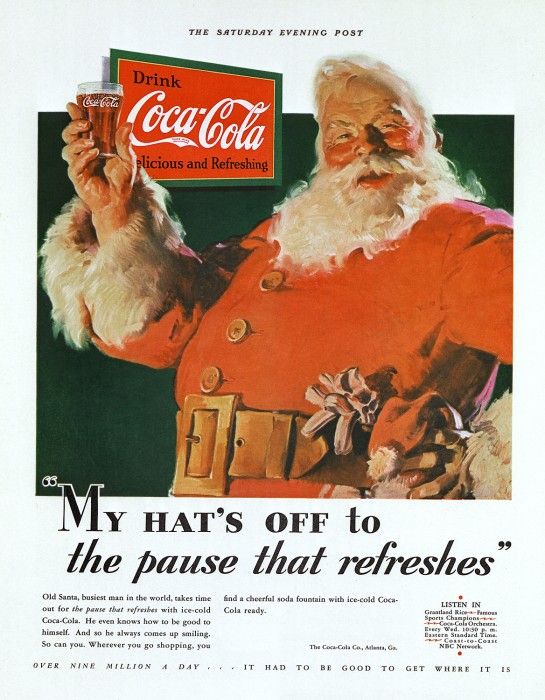
In 1931, Coca-Cola gave an illustrator named Haddon Sundblom an equally short-but-significant design brief: Reinvent Santa. Rather than the gaunt, stern elf of advertising’s past, Coca-Cola wanted to showcase a wholesome Santa Claus cosigning Coke in that year’s print promotions. Inspired by an 1823 poem we all know as “Twas the Night Before Christmas”, Sundblom created the first of what ended up being over 40 iconic Santa Claus illustrations for Coca-Cola. Like Earl Dean’s Contour Bottle, Sundblom’s handiwork laid the groundwork for decades of worldwide familiarity and fondness. While Coca-Cola is quick to say they didn’t “invent” Santa Claus, there’s no doubt they helped change how we all think of Saint Nick.
Credit: Coca-Cola / Haddon Sundblom
In the 1960s, Coca-Cola had to find a new way to define itself while fending off competitors. Thanks to the “Pepsi Generation” of younger consumers who wanted nothing to do with what their parents liked, the company’s market share shrank through the decade. The answer? “It’s the Real Thing.” This authenticity-focused tagline debuted in mid-1969 across commercials, print ads, catchy jingles, and more. While the phrase appeared in Coca-Cola advertisements for decades to follow, there’s no higher peak than what Mad Men creator Matthew Weiner cited as the greatest commercial ever made.
That slogan was coined by Bill Backer, an advertising executive who also co-wrote the song used in “Hilltop” and came up with the immortal “Things go better with Coke” and “Miller Time” slogans to boot. The idea for the song came to Backer while he was stuck overnight at an airport in Ireland under heavy fog. After watching a group of angry travelers start to laugh with each other over bottles of Coca-Cola, Backer wrote “I’d like to buy the world a Coke and keep it company” on a napkin. Within a month of that airport epiphany, “I’d Like to Buy the World a Coke” was playing at radio stations across the country.
“So that was the basic idea: to see Coke not as it was originally designed to be — a liquid refresher — but as a tiny bit of commonality between all peoples, a universally liked formula that would help to keep them company for a few minutes.”
Bill Backer
Bad weather continued to play a part in this story, earning “Hilltop” the crown for the most expensive commercial shoot to date after multiple rain-induced reshoots. The investment paid off when Coca-Cola received over 100,000 letters about the advertisement after it started airing–including requests to release the jingle as a single. “I’d Like to Buy the World a Coke” struck such a chord across the globe that an extended version rose through the charts to #1 in the UK and over a million sales. The commercial and accompanying song were both credited with boosting Coca-Cola’s sales and aligning their brand image with values popular with young people at the time.
In 2024, Coca-Cola released a trio of holiday commercials made with generative AI. Various AI models were fed Coca-Cola’s iconic 1995 “Holidays Are Coming” commercial as a primary “inspiration”; the results were broadly criticized for the wide range of technical errors and uncanny, uncomfortable characters.
In 2025, the beverage giant doubled down with another AI remake of “Holidays Are Coming” that was, again, widely panned for inconsistencies and errors.
I’m sure you’re wondering why we had to go through 100 years of Coca-Cola history to talk about this year’s holiday ad campaign. What do 21 words from a lawyer, a sketch inspired by the wrong plant, a few dozen pictures of Santa Claus, a napkin from an Irish airport, and piles of negative comments about a brand ripping itself off have in common? Well, Bill Backer answered that question 55 years ago.
“What the world wants today Is the real thing“
Bill Backer, “I’d Like to Buy the World a Coke”
Folks, I’m happy to say that Coca-Cola has seen the light. Last week, the brand revealed this year’s “Enjoy Joy” holiday campaign. The ad features a montage of human connection set to a very familiar tune. A reinterpretation of “I’d Like to Buy the World a Coke” plays over every kind of family as they play, cook, eat, and laugh together. In the final shot, the company’s greatest contribution to pop culture finishes a bottle of their greatest creation, as the last line of the song echoes back to a hilltop in Italy: “That’s the real thing.”
If it isn’t obvious, I’m glad to see Coca-Cola change course to better celebrate a season where we’re all supposed to be at our best and brightest. After two years of cold artifice, this year’s ad is a return to form everyone can be happy with… except the traditionalists who think Santa, polar bears, and semi-trucks should be the focus of every Coke ad. (Even still, I think the song will win them over.)
While this shift back to actual artistry is a great step in the right direction, we’re not out of the woods entirely. Fanta, the fruitier arm of Coca-Cola’s soda lineup, packed this year’s Halloween campaign with poorly received AI-generated visuals. As brands like Levi’s and Apple lean hard into human authenticity with claymation ads, I hope Coca-Cola’s decision-makers take a moment this winter to reflect on all the groundbreaking, human-led creativity that got them this far. Earl Dean, Haddon Sundblom, and Bill Backer changed the world while working for Coca-Cola, and they didn’t need AI to do it.
Griffin Parker is a writer based in Columbus, Ohio. In addition to covering food and beverage here on Sporked, he also runs @SodaSeekers, the largest social media news page dedicated to non-alcoholic beverages. He's sacrificed countless hours in the pursuit of ranking Lindt Lindor truffles, HI-CHEW candies, and more. You can regularly find Griffin traveling the country espousing the virtues of Dayton-style pizza, Cincinnati-style chili, and Dolly Parton's Fabulously Double Fudge Brownie Mix.
Thoughts? Questions? Complete disagreement? Leave a comment!


 Griffin Parker

 Justine Sterling

 Jessica Block
 Rachel Jones

Thoughts? Questions? Complete disagreement? Leave a comment!