

 Hebba Gouda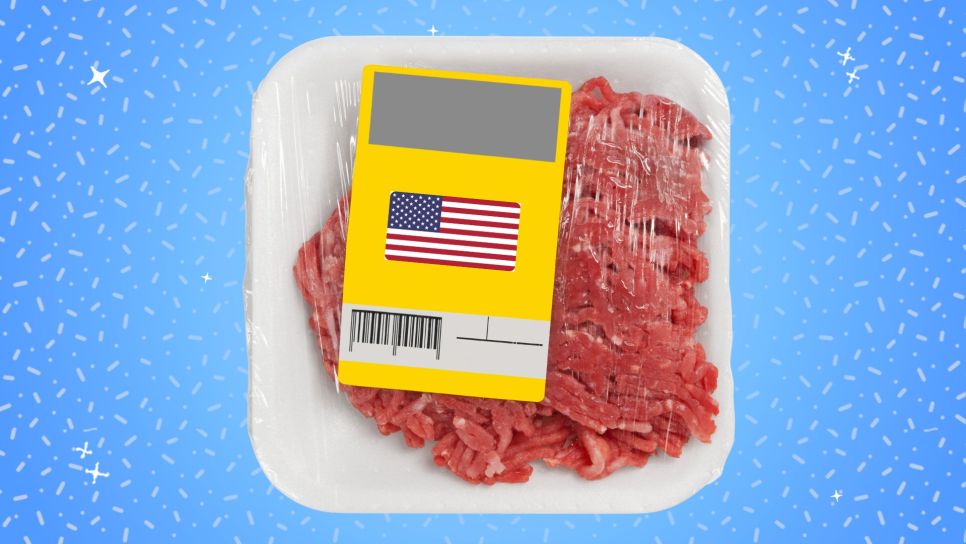
If we know anything about the United States Department of Agriculture (USDA), it’s that they know how to party. March 24th was National Agriculture Day, and the USDA celebrated with the only thing better than a nationwide rager: a national public awareness campaign about the new voluntary labeling standard, “Product of USA.” Let’s get into it.
Videos by Sporked
What does the “Product of USA” label mean?
The “Product of USA,” label is a voluntary label for items that are made in the U.S., from start to finish. That means that animals are born, raised, harvested, and processed in the U.S. The animals bleed red, white, and blue, and farmers would have to prove it by “maintain[ing] written documentation including: descriptions of controls for animal origin and processing steps, traceability and segregation records, and signed statements affirming that the claims are truthful and accurate.”
How is this different from the old label?
Up until the new label took effect at the beginning of 2026, certain meats already used something similar. However, that was merely a Food Safety Inspection Service (FSIS) label, meaning that the product passed the USDA inspection. There wasn’t a need for an all-American upbringing.
What products can use it?
According to the USDA, a “Product of USA” label can only be used on meat, poultry, and egg products from animals born, raised, harvested, and processed within the United States. If any of these steps happened outside the U.S., the producer is not permitted to use the label. If your chicken crossed the road and wandered into a Canadian processing plant, kiss that sticker goodbye. If your cow did its gap year backpacking in Thailand, no go. Luckily, those cases are few and far between, as Thai Airways often lacks bovine seatbelt extenders..
If my product doesn’t have the label, what does that mean?
“Product of USA” is voluntary, so companies can choose to add it to their packages if they meet the standards set by the USDA, but are not required to do so. Products could very well meet the qualifications and opt out of the label, which may serve as a little resume-booster for steaks who are gunning to be kebabed and thrust into a fire. It’s a take-what-you-can-get job market these days.
 Jordan Myrick
 Vinz Karl

Thoughts? Questions? Complete disagreement? Leave a comment!