

 Rachel Jones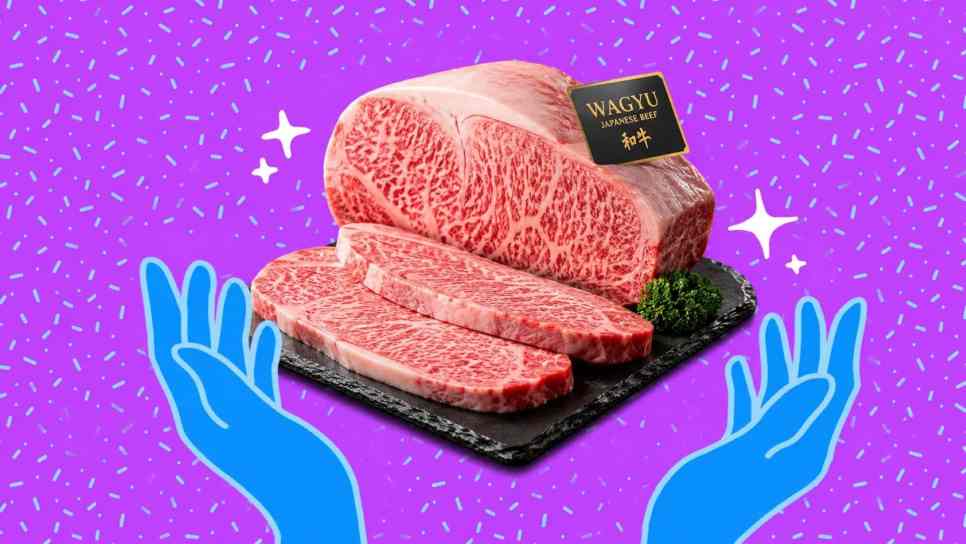
It feels like Wagyu beef has popped up just about everywhere these days―it’s completely infiltrated the standard market for American beef. I mean, if Costco sells it, then I think it’s safe to say it’s entered the mainstream American markets. But what do you think of when it comes to Wagyu? I think of beautifully marbled beef that is tender with a luscious mouth feel and incredible flavor. At least in theory.
Videos by Sporked
What will inevitably creep its way into my head though is how confusing the Wagyu market is. Maybe it’s because I’ve worked in a lot of restaurants, or maybe it’s because I am a big ol’ food nerd, but I’d be willing to bet that there’s at least a handful of other people who want to better understand what Wagyu really is. And with a price tag as hefty as Wagyu, the distinction is pretty important.
Let’s Break It Down―What Is Wagyu?
Wagyu, directly translated, means Japanese cattle. So, the term Wagyu really only serves to categorize the specific breeds of cattle that come from Japan and the style in which it is produced. It does not determine the quality, though. Japan’s national government has certain standards of quality that all Wagyu beef must be graded by, and the regional brands of Wagyu beef each must follow strict grading scales. The brands may vary in characteristics, but each is guaranteeing a certain standard of excellence in flavor, marbling, and texture.
American Wagyu
American Wagyu is very different to the international varieties due to U.S. standards and breeding. When Japanese cattle are brought to the United States, they are usually bred with American cattle, typically Angus, to create “American Wagyu”.
Sometimes the Japanese cattle are raised in the U.S. and sold directly without having been bred, but, generally, they are bred and categorized in percentages of Wagyu lineage. A full-bred, certified Japanese Wagyu cow bred with an American cow produce cattle defined as 50% Wagyu―in other words F1 status. As these cows are then bred with other Japanese cows, they produce 75% wagyu, reaching F2 status. This continues until F4 status with Wagyu percentages reaching 93.75%. In American Wagyu classification, this is the closest you can get to purebred.
Labeling and grading for American Wagyu can often be convoluted and not clear on packaging. In part, this is due to the national standards of Wagyu certification in the U.S. The USDA only formalized its certification for ‘Authentic Wagyu Beef’ in early 2025, and the program does not grade in levels of quality as do Japanese organizations. In the U.S., it is strictly pass or fail with no nuance. And that’s not to say that it makes it a bad product, just less clear than its Japanese counterpart regarding the quality of the (expensive) cut you’re purchasing.
Australian Wagyu follows the same structure for American Wagyu breeding using Australian Angus to breed with the Japanese cattle. Both American and Australian Wagyu offer a beefier flavor than Japanese Wagyu due to the crossbreeding. The key difference here is that Australian Wagyu’s designations in quality are clearer and more defined.
American Wagyu is certainly more accessible to those of us in North America, but if you want to know exactly what you’re getting―and are willing to pay the big bucks―then it’s a safer bet to get Japanese or Australian Wagyu.

 Hebba Gouda
 Justine Sterling

Thoughts? Questions? Complete disagreement? Leave a comment!