

 Jay Wilson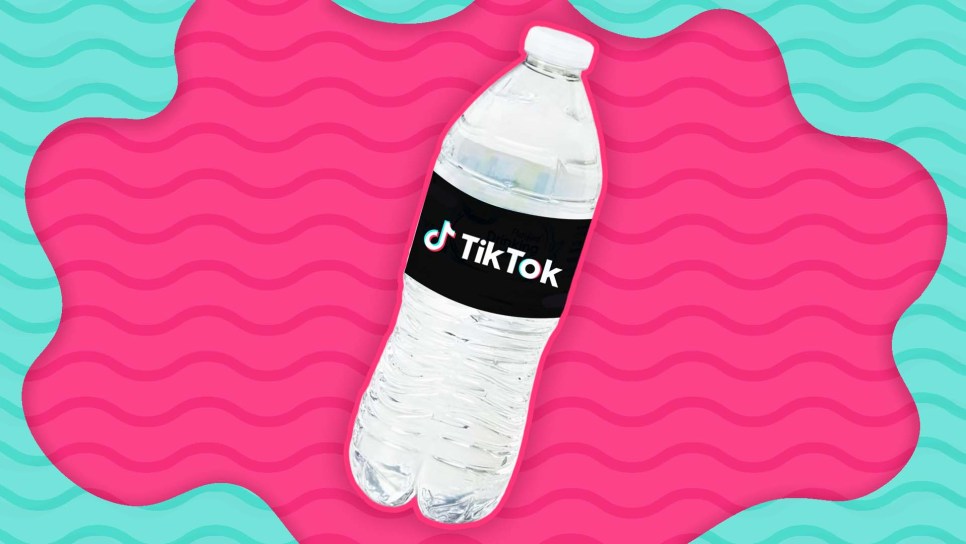
Like most social media platforms, TikTok has a lot of noise on it – and not all of it is useful. Disinformation can spread quickly via its videos, and without rigorous fact-checking, feedback loops can appear where the same information is repeated over and over, which only gets worse when some of these videos end up going viral.
Videos by Sporked
Sometimes, said disinformation can be fairly innocuous; other times, it can be a little more subtly insidious. This is arguably the case with the water bottle rumor that’s been going around TikTok for nearly two years now, and it’s probably time to put a stop to it once and for all.
What Is The TikTok Water Bottle Rumor?
As Snopes discusses, the TikTok water bottle rumor asserts that the colors of bottle caps dictate either what type of water you’re getting in the bottle or how it’s been processed. According to the people who have circulated the rumor, blue caps indicate spring water, while green caps indicate flavored water. Black caps, meanwhile, show that the water’s alkaline, while white caps are for “processed” water.
And Is There Any Truth In It?
No. Neither the FDA nor the EPA (both of which regulate bottled water in the United States) has any rules around water bottle cap colors. The color of a water bottle cap is dictated not by what’s inside, but by the brand that makes it and its chosen designs and colors. While it’s true that certain brands with colored caps match the type of water that the rumor indicates (like Essentia’s alkaline water, with its black caps), others don’t match it at all.
Who Started It?
Snopes has traced the bottled water rumor back to TikTok posts that appeared as early as 2023, with one account with the handle @caketella posting a video with this information in July of that year. It then travelled over to Instagram and has been circulating on both social media platforms since, occasionally seeing a resurgence in popularity.
The exact creator of the rumor, though, is unclear – and it’s also not entirely clear what the intentions behind it were, and whether it was intentional or unintentional misinformation. Nonetheless, it’s persisted.
Why Is It A Problem?
Well, there are two main reasons. The first is clear: This information is simply untrue, and the fact that it’s been able to spread unchecked feels like a bit of a sign of the times. Disinformation is rife online, and if we lose sight of truths and details, we end up becoming part of the problem, not the solution.
The second is that there’s a risk this rumor could reinforce potentially misguided ideas about “clean” eating, specifically with regard to its assertion that certain water is “processed.” There’s no indication what this processing entails – and in truth, all water is processed and treated for consumer safety. The potential implication that you should avoid specific brands because of bottle caps alone is false.

 Jessica Block
 Justine Sterling

Thoughts? Questions? Complete disagreement? Leave a comment!